THE PLASTIC PROBLEM OF THE OCEANS
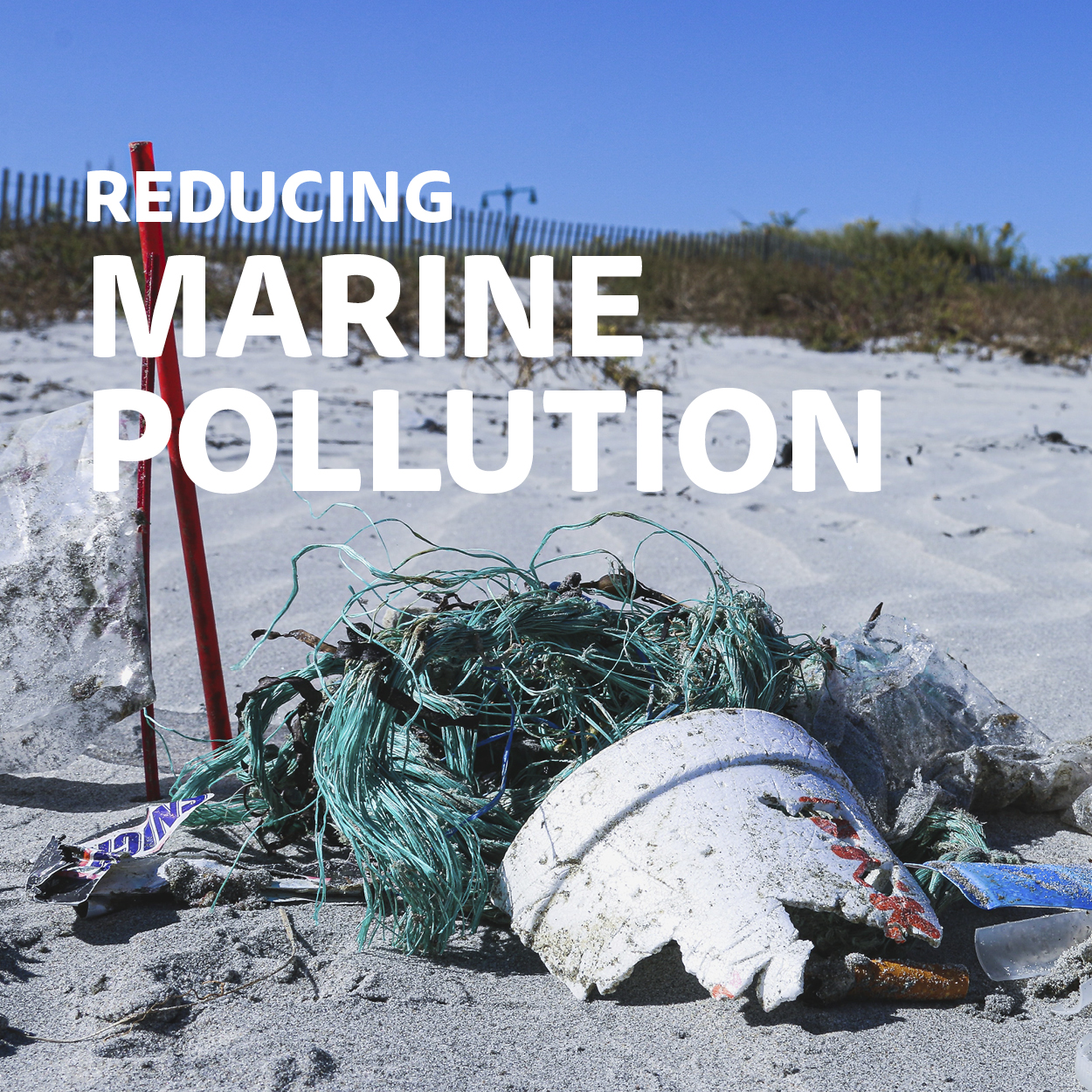
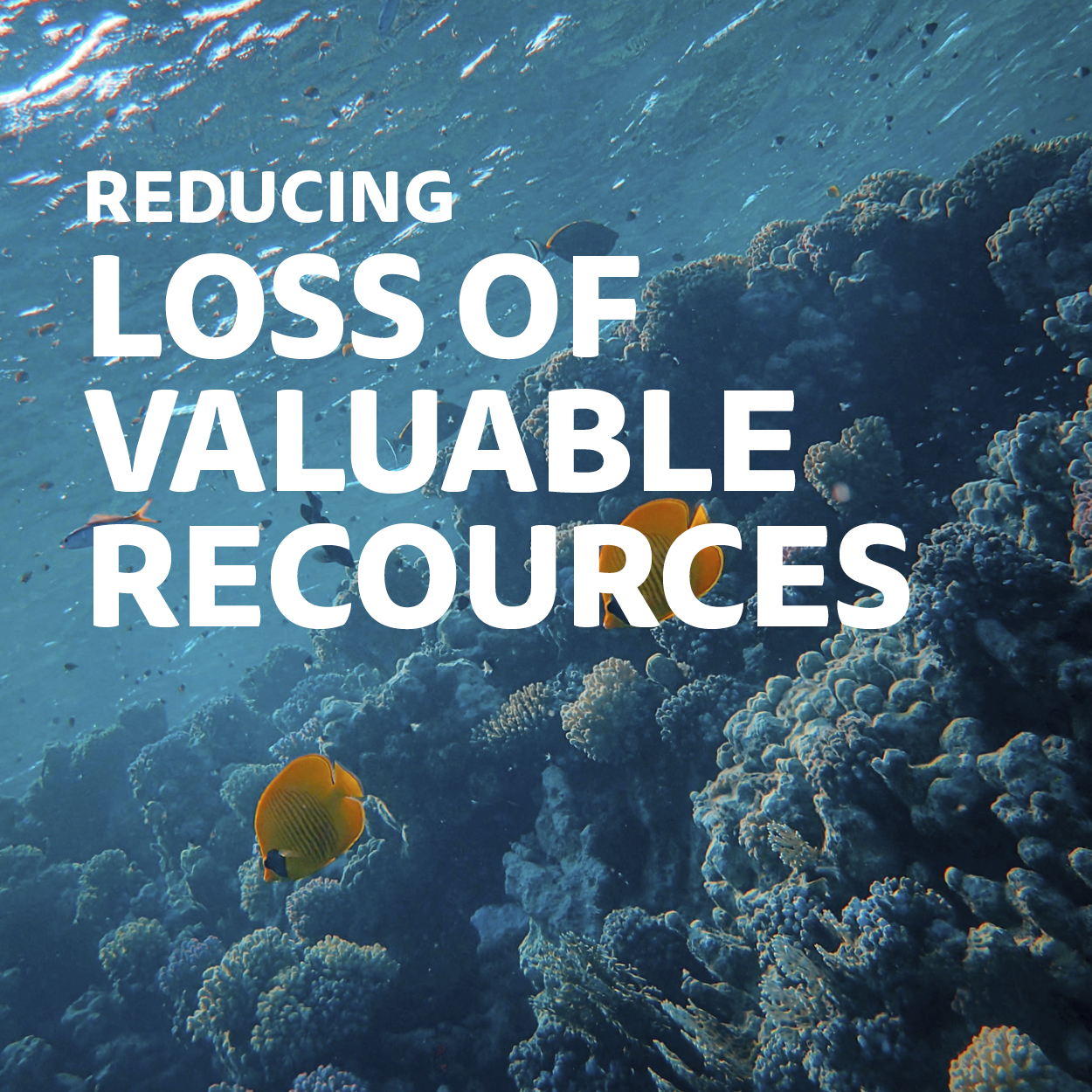
- Without ambitious action, plastic pollution is projected to more than double by 2040, reaching an estimated 280 million metric tons per year
- Plastic pollution affects ecosystems around the world. Over 2'100 species have been found to encounter plastic pollution in their natural habitat.
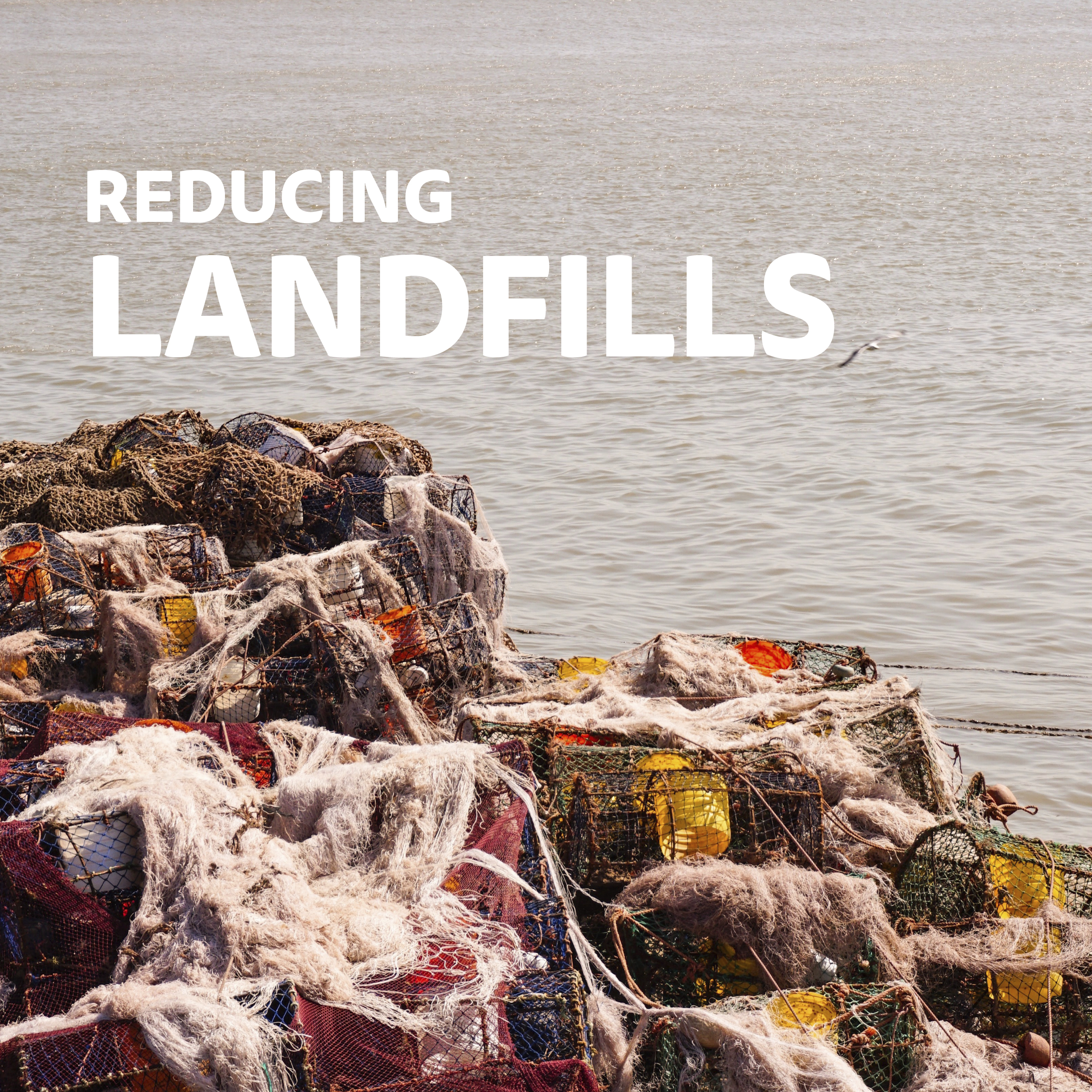
- Discarded fishing nets, ropes and other maritime equipment are among the forms of plastic waste that can enter marine environments and threaten wildlife through entanglement and ingestion.
- Source: WWF
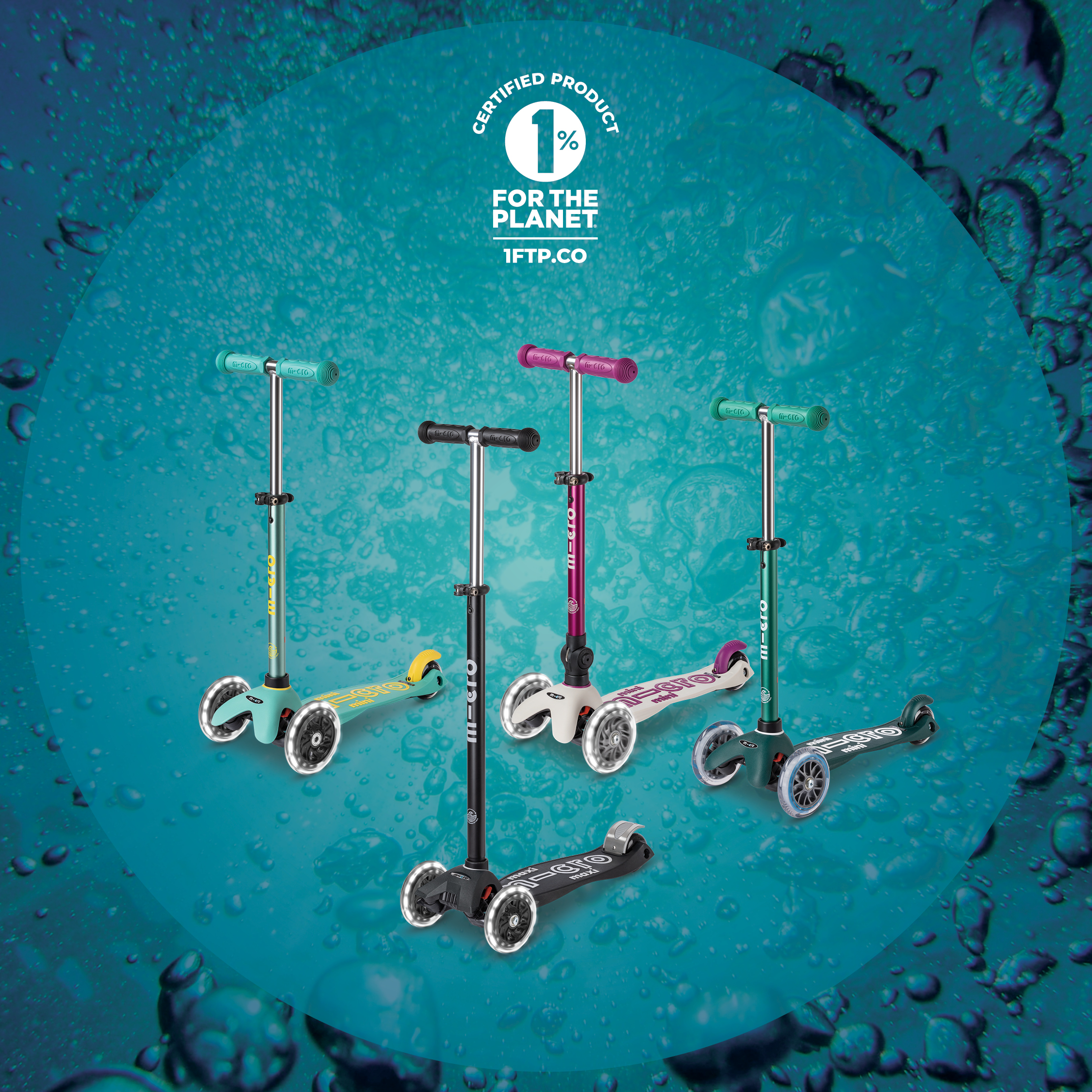
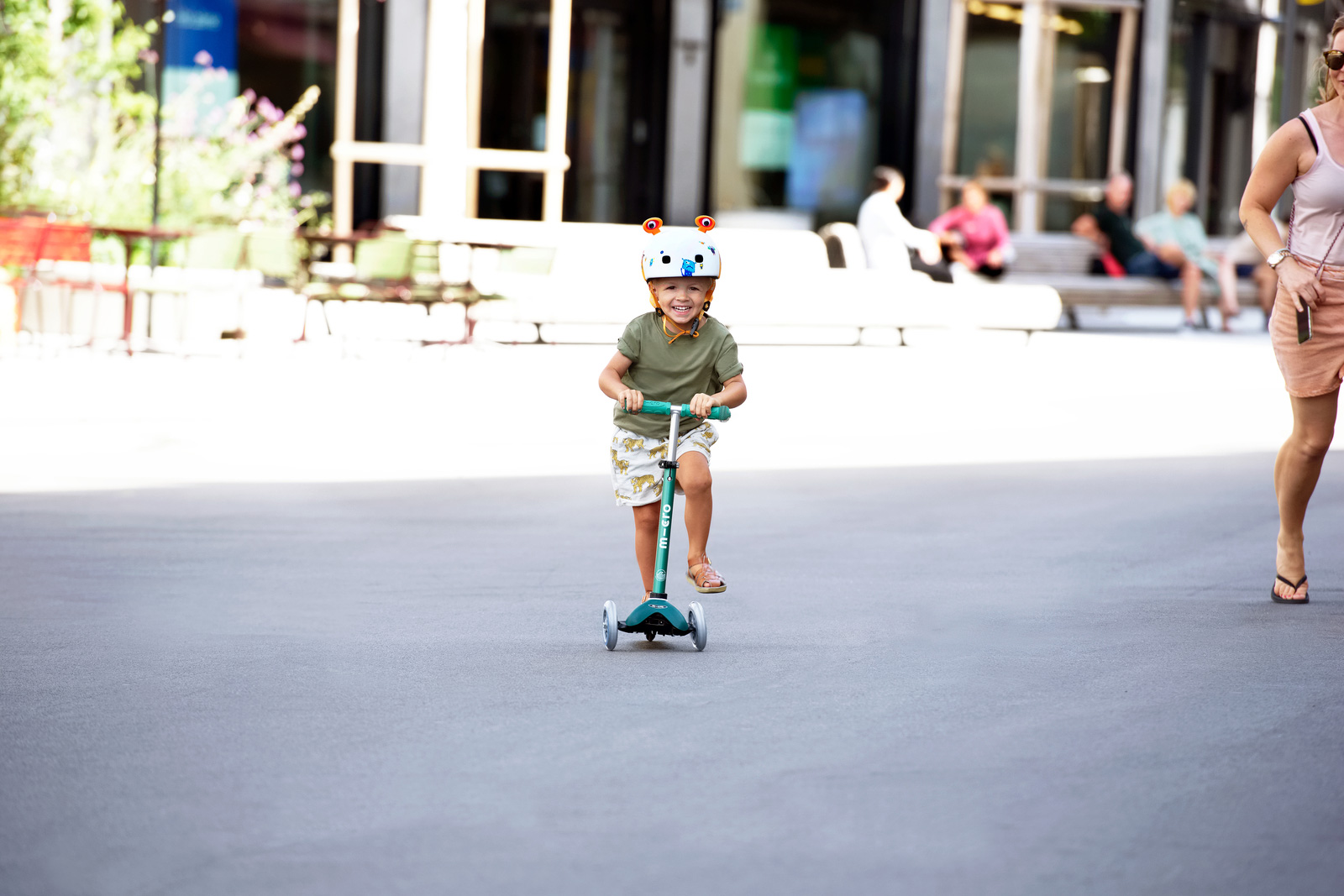
ECO KIDS SCOOTER FROM RECYCLED MARITIME WASTE
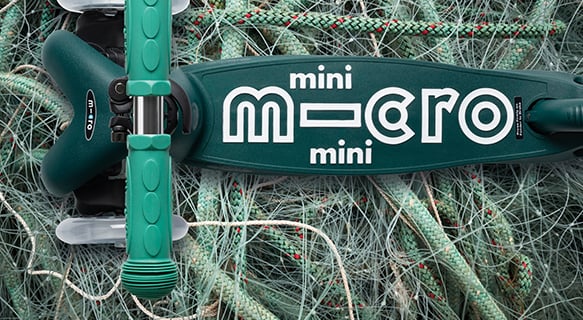
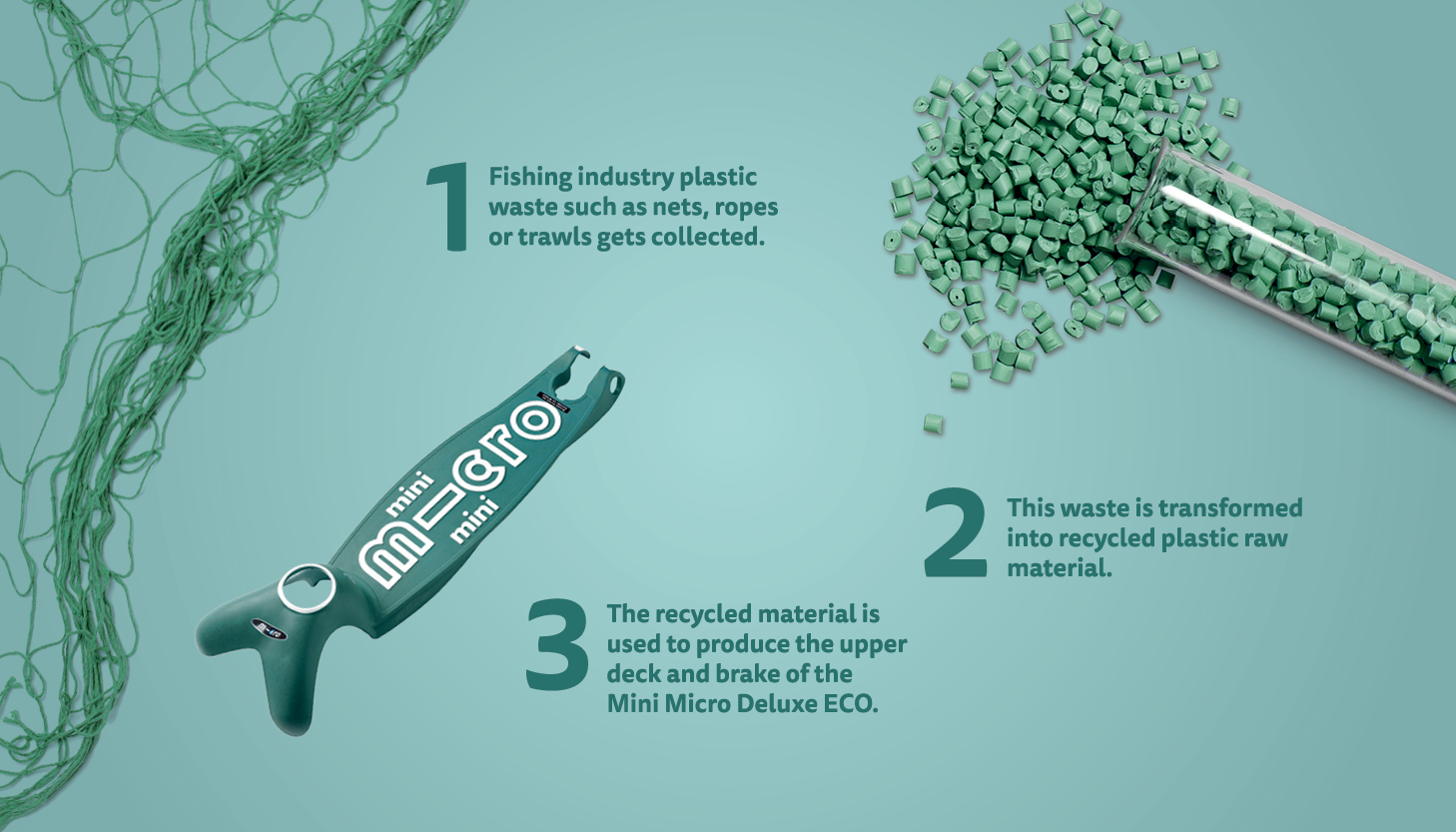
Discarded fishing nets and ropes can be given a second life through recycling. Selected components of our ECO Kids Scooters incorporate recycled plastic materials derived from these maritime waste streams.
While the materials are different, the riding experience remains the same: the patented lean-to-steer system encourages active movement and coordination, height-adjustable handlebars adapt to growing children, and the non-slip footplate is designed for confident everyday riding.
THINKING IN CYCLES
We believe valuable materials should remain in use for as long as possible.
That's why our ECO Kids Scooters incorporate recycled plastic materials derived from discarded fishing nets, ropes, boxes and other plastic waste from maritime activities. Through mechanical recycling, these materials are transformed into high-quality recycled plastic and used in selected components of the Mini & Maxi Micro ECO.
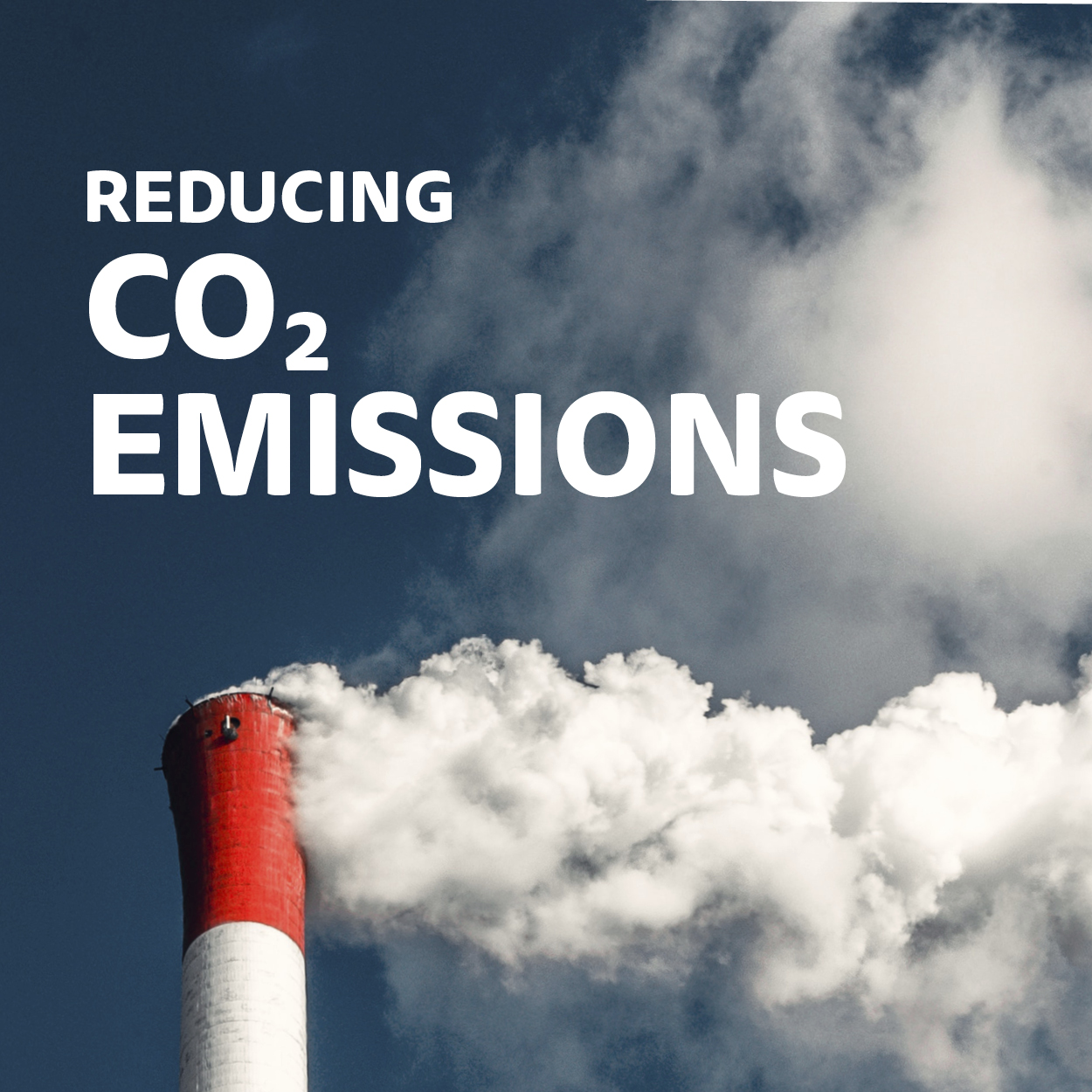
The ECO range reflects our ongoing efforts to increase the use of recycled materials and promote a more circular approach to product design, while maintaining the durability, quality and functionality that define Micro products.
FAQs
Which scooter models are available as ECO version?
Currently, the following scooter models are available as ECO version:
- Mini Micro 3in1 Deluxe
- Mini Micro Deluxe
- Mini Micro Deluxe (Foldable) LED
- Maxi Micro Deluxe LED
- Micro Sprite LED
It is possible that other Micro Scooter models will be available as ECO version in the future.
What does ECO mean exactly? What material are the scooters made of?
The Micro ECO Kids Scooter range incorporates recycled plastic materials. Selected components, including the deck and, on certain models, the brake, are made using recycled plastic derived from discarded fishing nets, ropes and other plastic materials from maritime activities.
What exactly is meant by «Green Plastic»?
The term "ocean plastic" is often used broadly to describe plastic waste that has been collected from, or at risk of entering, marine and coastal environments.
For our ECO products, "Green Plastic" refers to recycled plastic materials sourced from discarded fishing nets, ropes, trawls and other equipment from the maritime industry. These materials are collected and recycled into high-quality plastic raw materials that can be used in new products.
By incorporating recycled materials into selected components, we aim to reduce our reliance on virgin plastic and support a more circular approach to material use.
Does the Mini & Maxi Micro Deluxe ECO differ in quality due to the use of recycled plastic?
No. The recycled plastic material used in the deck and brake components of the Mini & Maxi Micro Deluxe ECO is designed to meet the same quality and performance requirements as the conventional material used in our products.
What about the packaging? Is it also sustainable?
We have also reviewed the packaging of our ECO products. The packaging uses FSC-certified paper, and we have worked to minimise the amount of plastic used inside the box. The scooter is not packaged in a plastic bag, and the handlebars are protected with paper wrapping. The user manual is printed on FSC-certified paper and packaged in a bag made from degradable material.